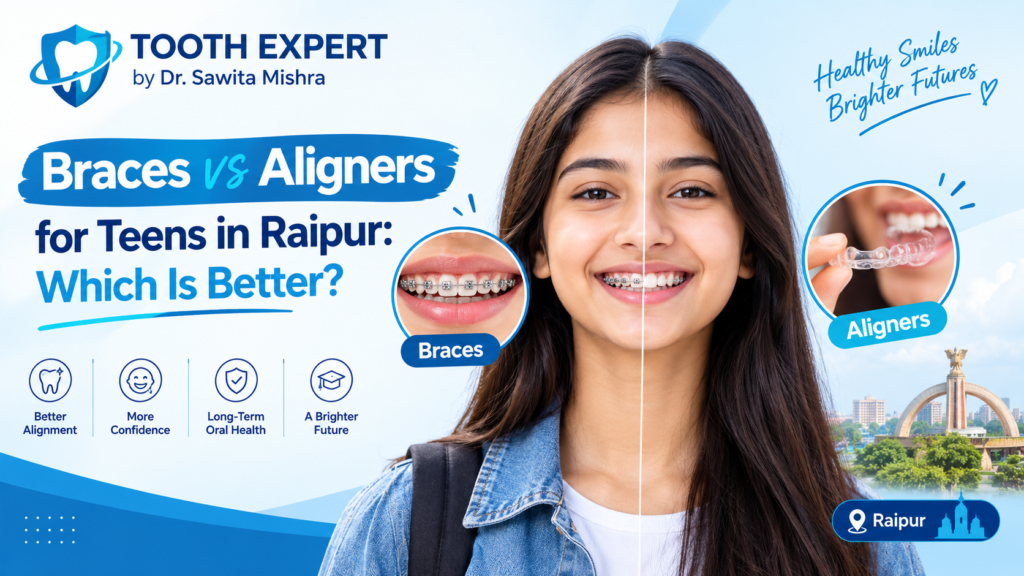
You are in school, college or your first job. Your friends are posting photos, and you have started noticing your own smile in every one of them. Maybe a tooth is crooked, there are gaps, or your bite feels off.
You have probably already googled “braces or aligners?”, “do braces hurt?” and “how long will I wear them?” This guide answers those questions in plain language, so you can decide with confidence.
What is the best age to get braces?
There is no single perfect age. Most teens start braces between 11 and 15 years, when most permanent teeth have come in and the jaw is still growing. That growth often makes treatment more efficient.
Adults and young adults can get treatment too. If you are 18, 22 or 28 and unhappy with your smile, it is not too late. Healthy teeth and gums are what matter most, not your age.
What are traditional braces?
Traditional braces use small brackets fixed on your teeth and connected by a wire. Your orthodontist adjusts the wire at regular visits to guide your teeth into place.
Good for:
- Complex crowding or spacing
- Bite problems and jaw alignment issues
- Teens who may not be disciplined about removable appliances
Things to know:
- They are visible (coloured bands can make this fun)
- You need to be careful with sticky and hard foods
- Brushing takes more time
What are clear aligners?
Clear aligners are transparent, removable trays made to fit your teeth. You switch to a new set every few weeks, and your teeth shift gradually.
Good for:
- Mild to moderate alignment concerns
- Students and young professionals who want a discreet look
- People who want to eat and brush without working around brackets
Things to know:
- You must wear them about 20 to 22 hours a day
- You need to remove them to eat and drink anything other than water
- Not every case is suitable, and your orthodontist will tell you honestly if yours isn’t
Braces vs aligners: quick comparison
| |
Traditional braces |
Clear aligners |
| Look |
Visible metal or ceramic |
Nearly invisible |
| Removable |
No |
Yes |
| Eating |
Some food restrictions |
Remove while eating |
| Cleaning |
Needs extra care around brackets |
Brush normally, clean trays daily |
| Best for |
Simple to complex cases |
Mild to moderate cases |
| Discipline needed |
Low |
High |
| Check-ups |
Regular adjustments |
Regular progress reviews |
Do braces hurt?
Honest answer: you may feel soreness or pressure for a few days after getting braces or changing to a new aligner set. It is usually mild and settles quickly. Soft food, a warm saltwater rinse and orthodontic wax for any rubbing can help. It is not constant pain, and most people get used to it fast.
How long does treatment take?
It depends on your teeth, your bite and how closely you follow instructions. Many cases take from several months to a couple of years. After your examination, your orthodontist can give you a realistic timeline for your case rather than a one-size-fits-all number.
Can braces or aligners fix a bite problem, not just crooked teeth?
Yes, and this matters more than most people expect. Orthodontics isn’t only about looks. Teeth that fit together well are easier to clean, chew with and keep healthy over time. A proper orthodontic assessment looks at your teeth, jaws and bite together.
Tips to get the best results
- Brush after meals and floss daily. Braces and aligners trap food if you skip this.
- Wear aligners as instructed. Results depend on it.
- Avoid very hard or sticky foods with braces.
- Keep every appointment. Skipped visits slow your progress.
- Wear your retainer after treatment so your new smile stays in place.
How to choose: ask yourself these 4 questions
- Is my case simple or complex? (Only an orthodontist can tell you.)
- Will I really wear removable aligners for most of the day?
- How important is a discreet look during college, work or events?
- Am I ready to commit to regular visits?
The right answer comes from an examination, not guesswork or what worked for a friend.
Why see a qualified orthodontist in Raipur?
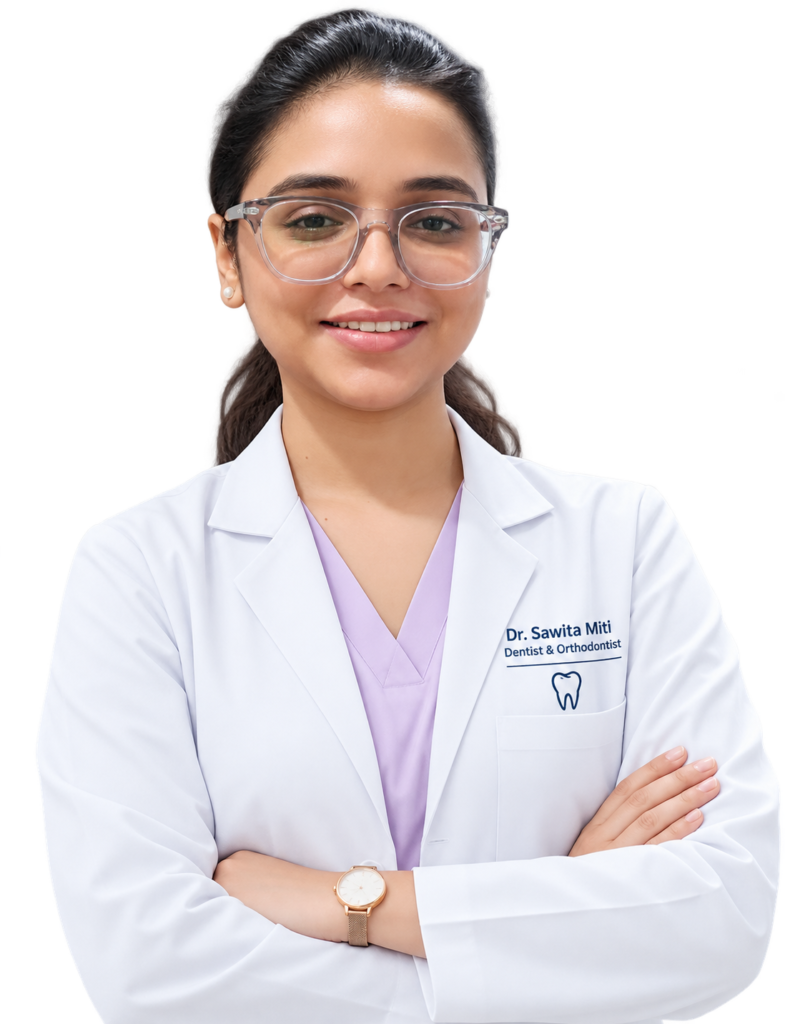
Orthodontic treatment moves teeth and affects how your bite works for years to come, so a specialist plan matters. Dr. Sawita Mishra at Tooth Expert holds a B.D.S. and an M.D.S. in Orthodontics and Dentofacial Orthopaedics. She treats cases with braces and aligners, and she also works with children using habit-breaking and myofunctional appliances, so she can see how your bite is developing early on.
Teen offer: Tooth Expert is currently offering 20% off for teenagers. Ask about it when you book your consultation.
Book your smile consultation
Ready to find out whether braces or aligners suit you?
- Call or WhatsApp: +91 90099 95772
- Clinic: Tooth Expert, Sanjivani Super Speciality Clinic, Raipur, Chhattisgarh 492001
- Timings: 11:00 AM to 2:00 PM and 5:30 PM to 8:00 PM, Monday to Sunday
- Website: toothexpertraipur.com